
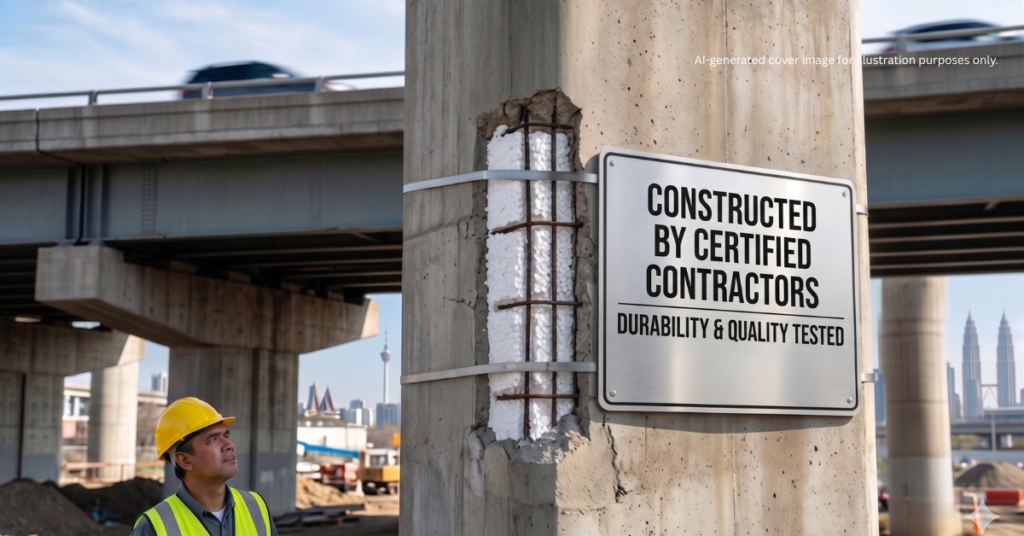
Becoming a licensed contractor is unsettlingly easy, raising concerns that unqualified players are flooding the industry and putting the quality and safety of infrastructure at risk
After nearly two years of investigation, SAYS uncovered a thriving network of consultants exploiting the low barriers to contractor registration, using "technical certificates" to allow virtually anyone to enter the market.
Many of these individuals chase projects, including government contracts, only to subcontract the work to others.
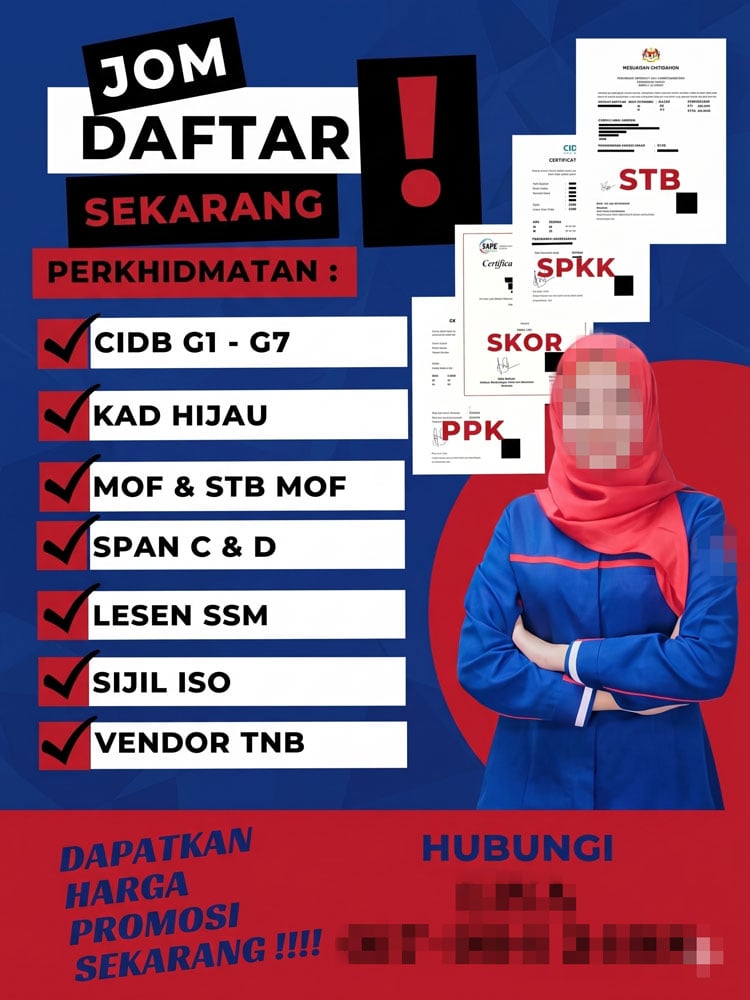
In Malaysia, the first licence contractors should obtain is the Contractor Registration Certificate (PPK). No background checks are required — only a declaration of services, which is enough to be officially recognised as a legitimate contractor.
Most PPK-only holders are petty contractors handling small-scale projects.
Those seeking to compete for government contracts require the Certificate of Government Procurement Work (SPKK) — a certificate that certifies the contractor's competency.
Once the SPKK is obtained, contractors must also secure the Contractor Registration Status Certificate (STB) to qualify for government project bids.
Obtaining SPKK requires technical qualifications, and this is where the cracks begin to show.
Kontraktor
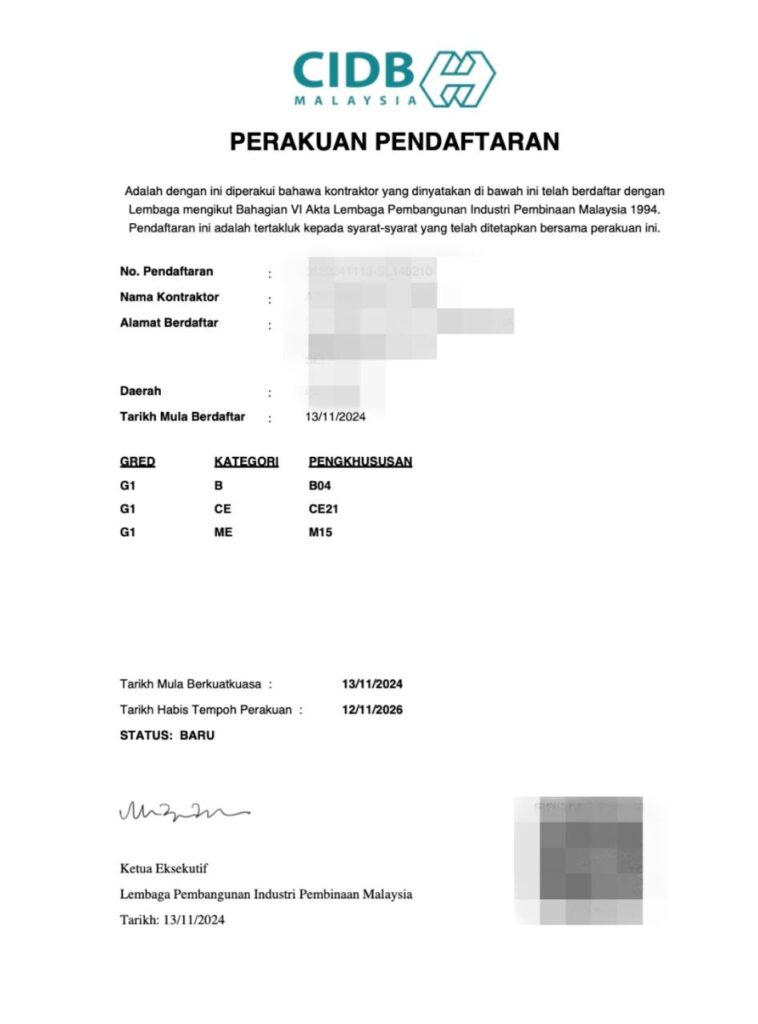
- Applicants only need to declare their services to be officially recognised as legitimate contractors.
- PPK holders typically undertake small-scale projects. No background checks required.
Kerajaan
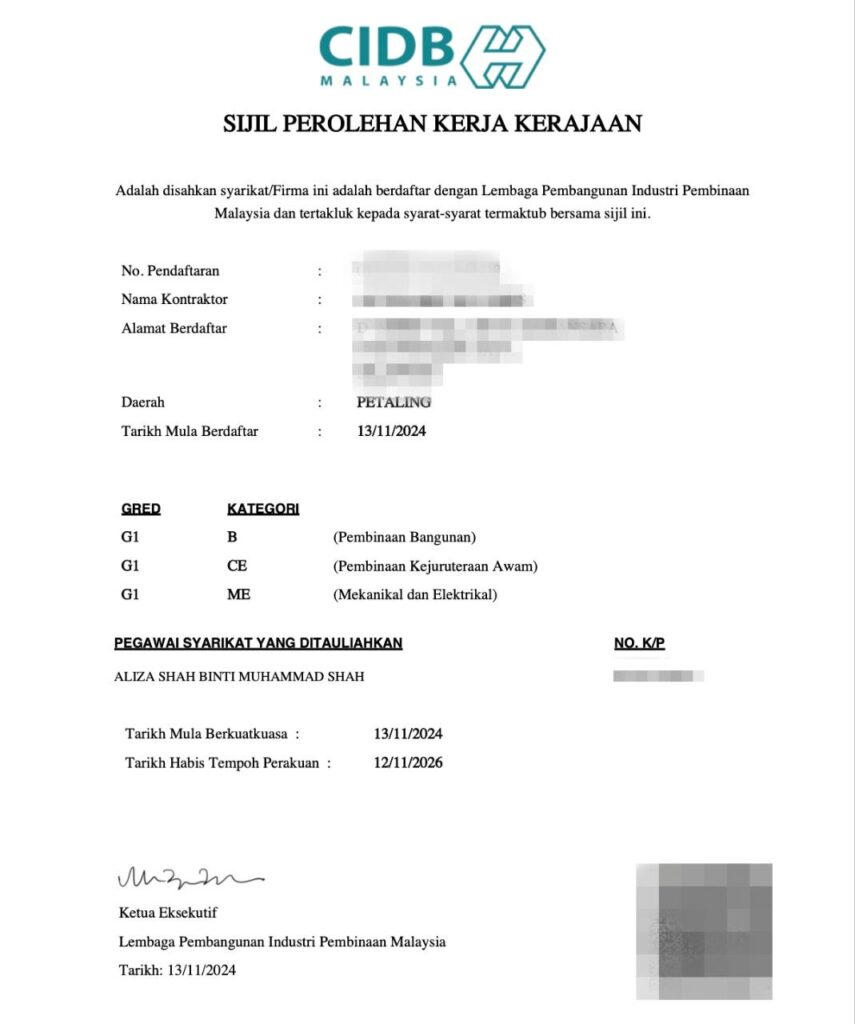
- Must obtain to bid for government projects.
- Requires technical certificates for competency — this is where the system is exploited.
Bumiputera
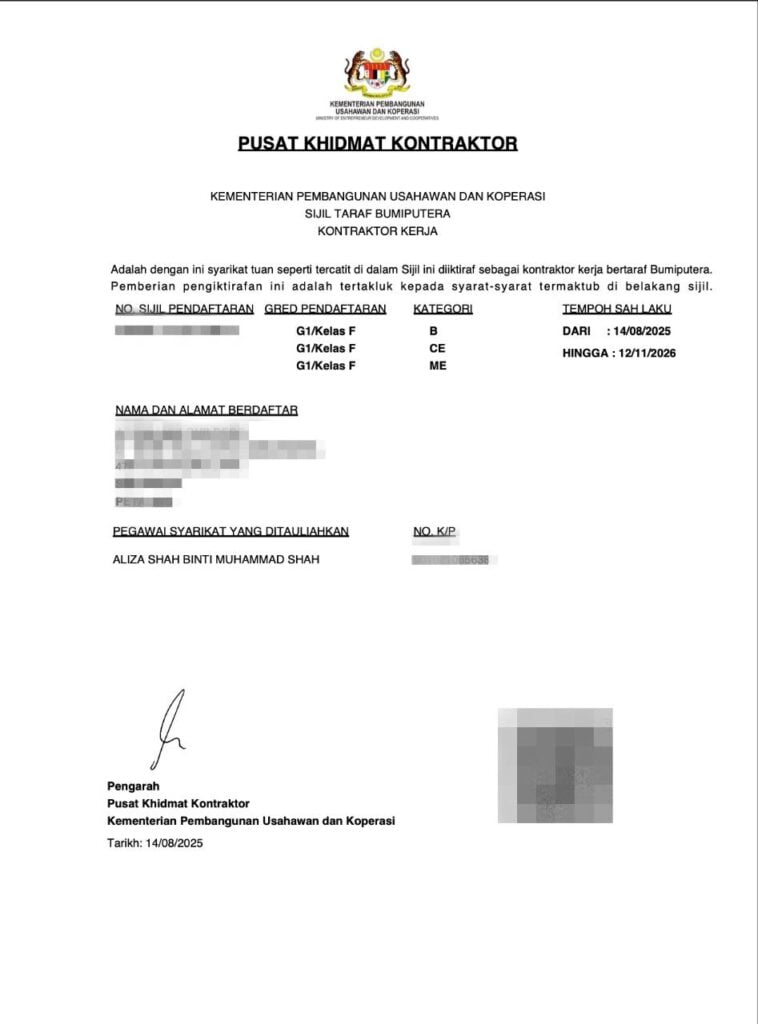
- Grants access to Bumiputera-only government project quotas.
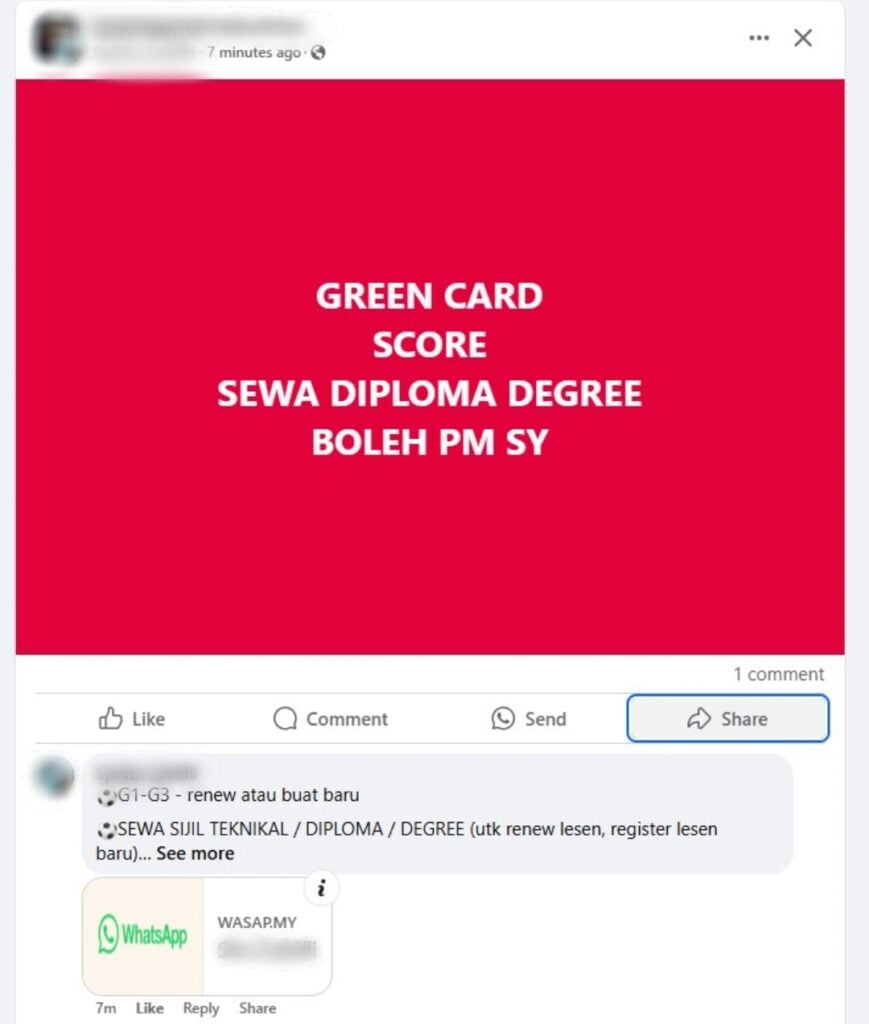
"Dijamin lulus 100%," read one poster on Facebook
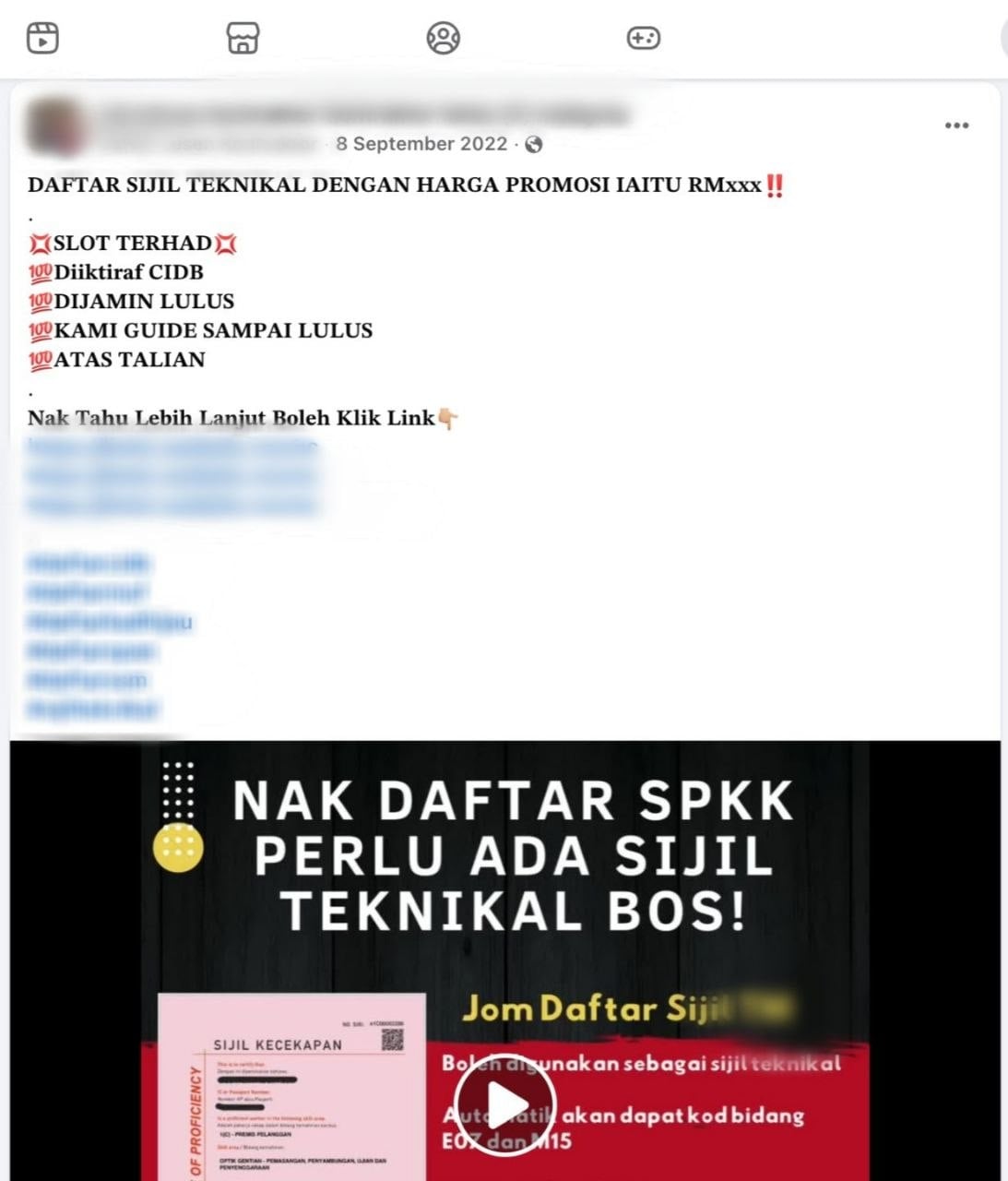
Operating under the guise of 'consultants', many groups offer technical certificates to individuals without the required qualifications, enabling them to register with the Construction Industry Development Board (CIDB) and apply for SPKK and STB.
Certifications allegedly include those from the Malaysia Construction Academy (ABM), utilities companies, and even a government agency.
Previously, some contractors submitted fake educational certificates, risking exposure during CIDB audits, but the ease of obtaining these technical certificates has made detection far more difficult.
These consultants promote their services on social media, often avoiding face-to-face meetings and communicating exclusively via WhatsApp.
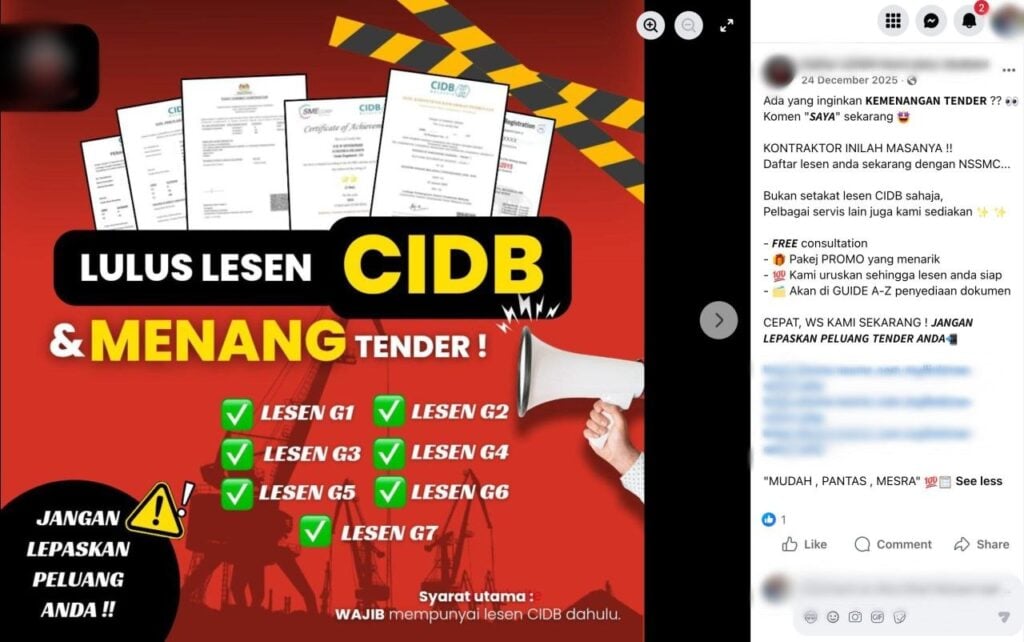
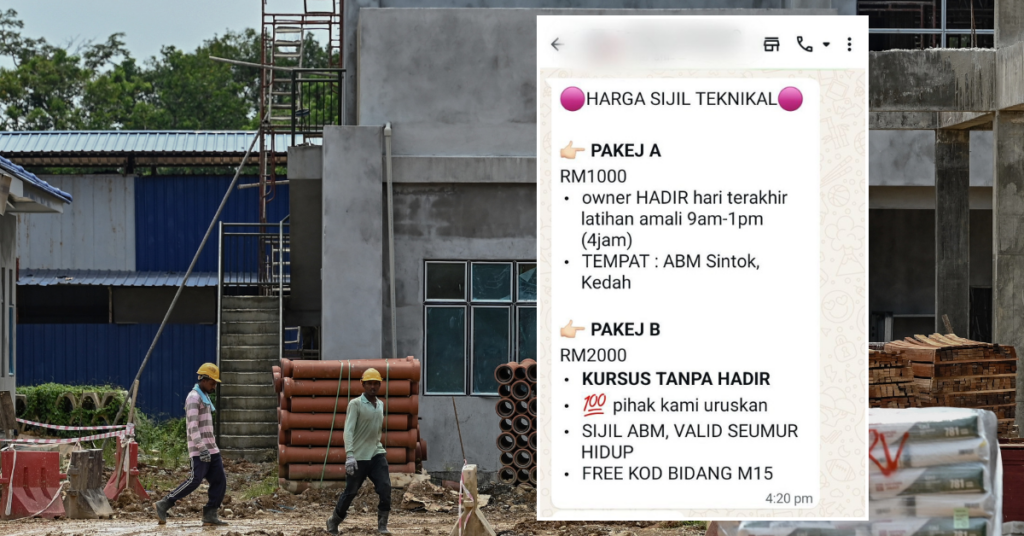
Various ways to obtain technical certificates are available, some requiring no course attendance
When approached by the reporter, a consultant, Feefa (not her real name), said there were two options: Package A, "by attendance", requiring a physical course, and Package B, "without attendance", requiring none.
Feefa claimed that within four to five weeks, the journalist could obtain a technical certificate allegedly issued by ABM. The fee was RM2,000, and the certificate could be used indefinitely.
Those with financial constraints could go for Package A at RM1,000, which requires participation in a four-hour "practical training" on painting at ABM Sintok, Kedah. A "shortcut" is still given, as the course would actually take five days, followed by an examination.
Another consultant, Liza (not her real name), recommended the journalist the Construction Skills Competence Certificate (SKKP), allegedly from ABM, which she said required no examination. It cost RM1,800, and this certification could also be used to apply for SPKK.
Liza said issuance of the certification would take about a month due to the requirement to attend a five-day course.
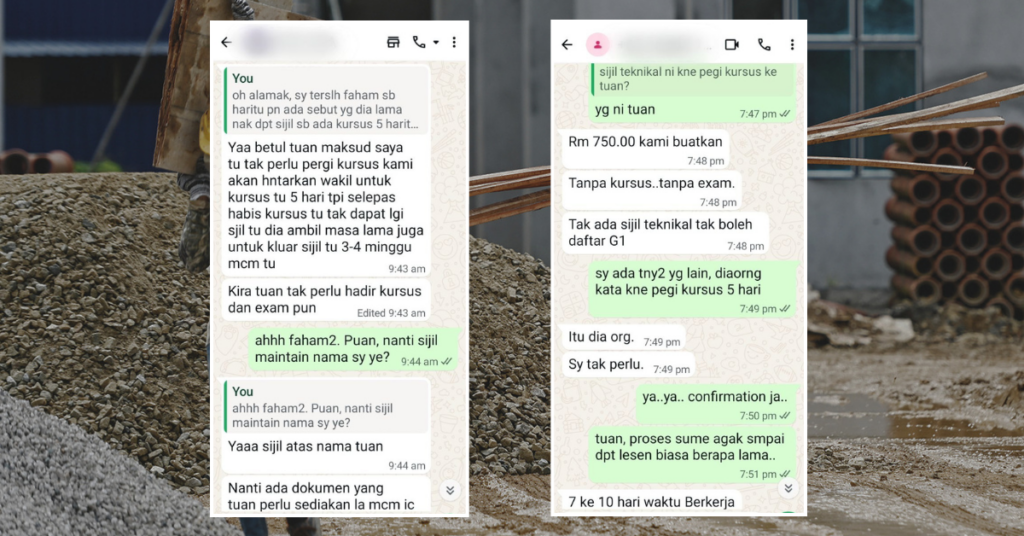
Technical certification from a utilities agency
The reporter was also offered technical certification allegedly issued by a utilities agency.
Ray (not his real name), who was careful to erase our exchanges, said participants need only attend an online class before sitting an examination in Cyberjaya.
His price tag is RM1,960, with half payable only after obtaining all three licences — PKK, SPKK, and STB. Participants would be given four codes, including B04, which permits general building, construction, and utilities-related work.
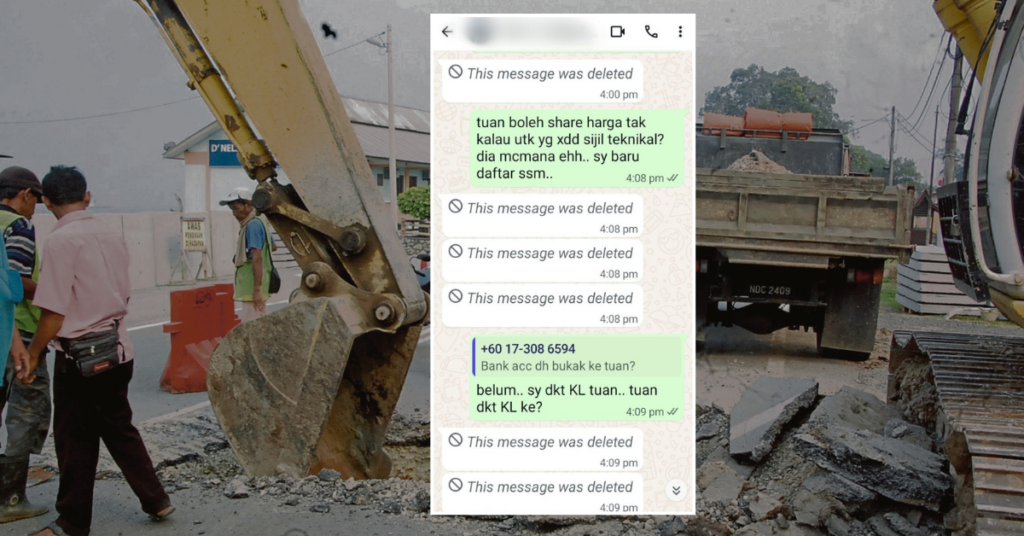
Graduates renting out their certifications
The journalist also encountered consultants who rented out tertiary education certificates, with fees ranging from RM4,500 for a diploma to RM6,500 for a degree for SPKK registration.
Ismail (not his real name) attempted to convince the journalist by sharing his client's company profile, claiming the licence had been registered using a certificate belonging to a public university student.
The tertiary certification works by allowing a construction company to apply for SPKK by registering a certification holder as its technical personnel, demonstrating the company's technical competency. However, to do so, the company must provide a three-month EPF statement to prove employment — a step Ismail claimed he could handle.
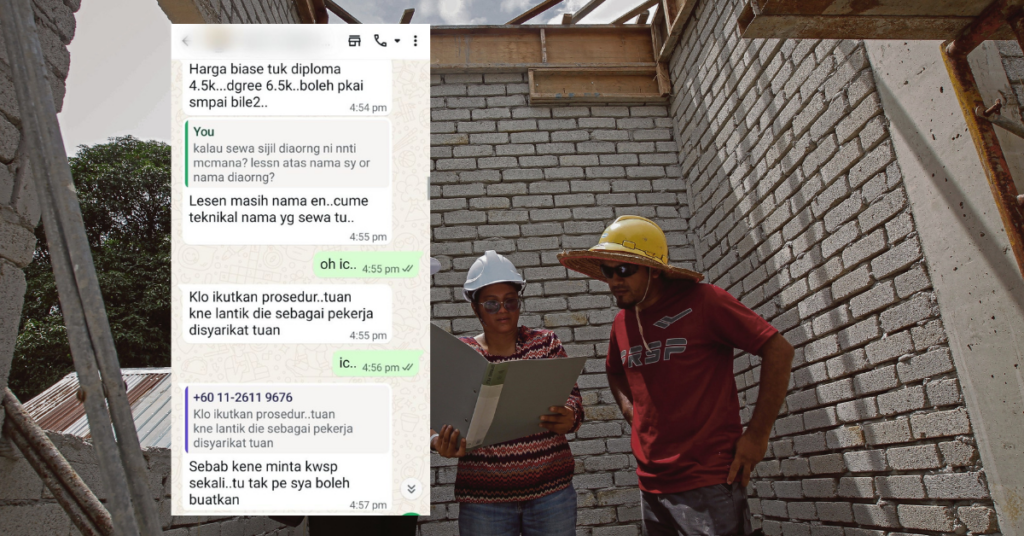
Siti (not her real name) charged RM3,000 for a Sijil-level certificate valid for two years. Diploma and degree certificates can cost up to RM6,000.
When asked if the reporter could be caught in a CIDB audit, Siti, slightly annoyed, said no issues had arisen so far.
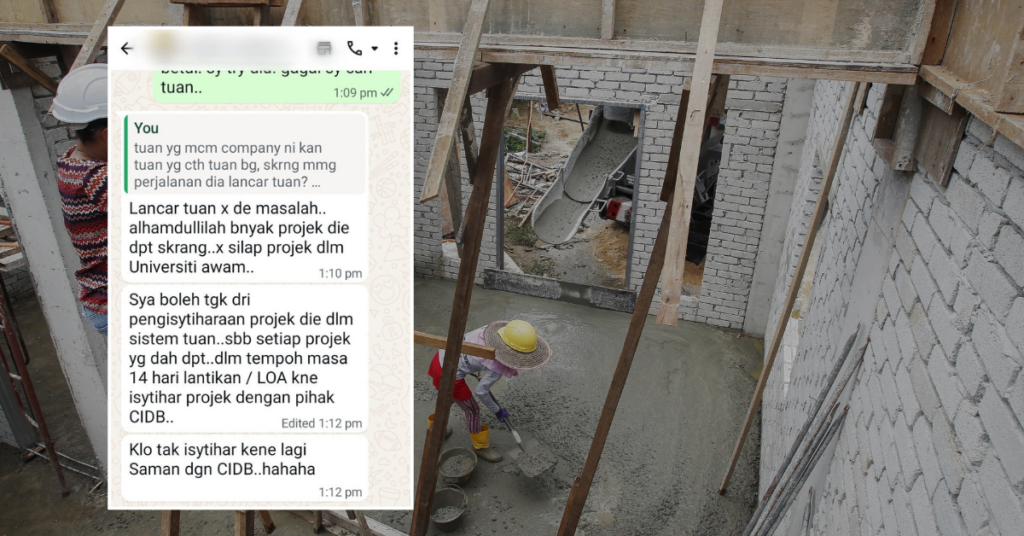
Ismail assured the journalist that none of his previous clients had faced trouble and were progressing steadily.