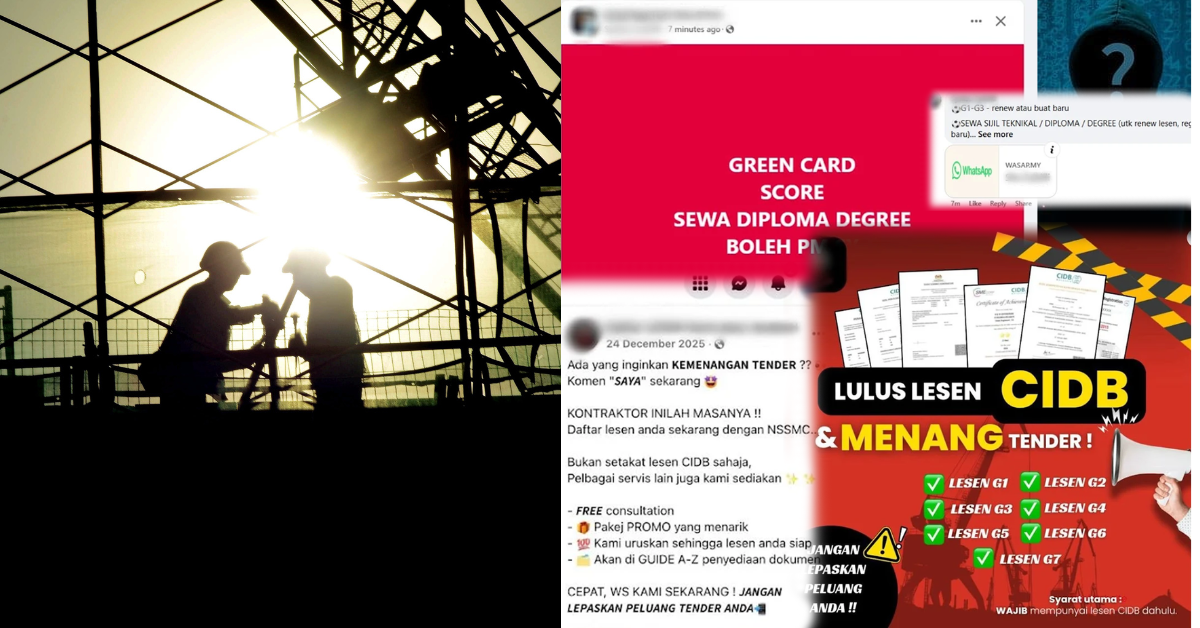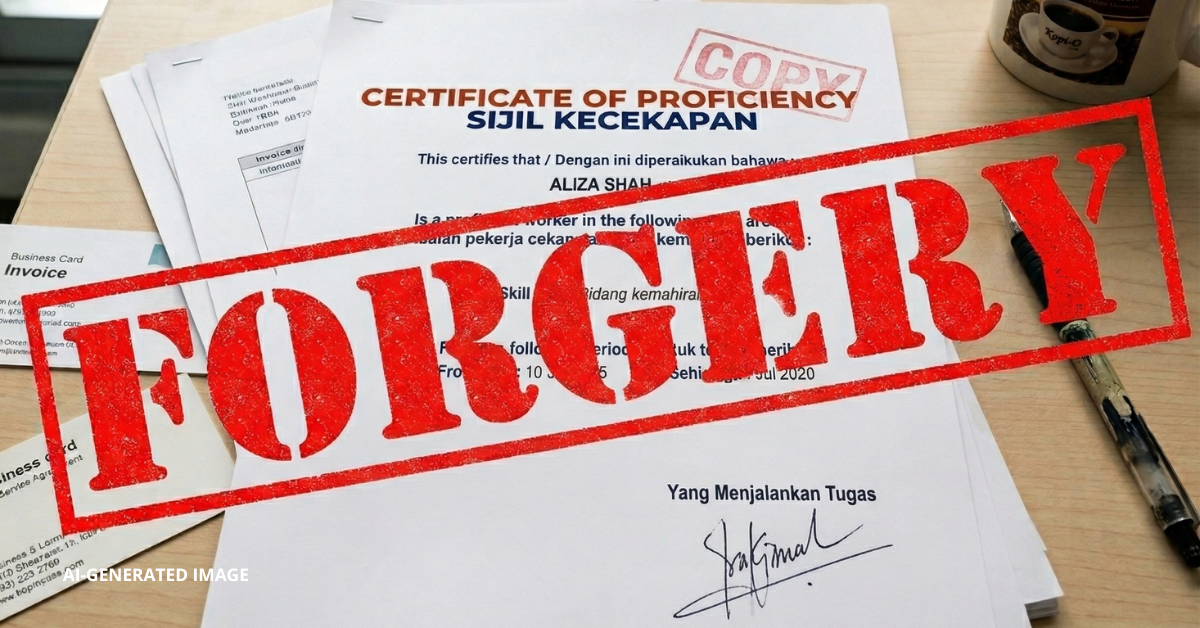
A journalist became a licensed contractor and joined government tenders to uncover how proxies are used to secure government contracts.
Although I did not win my first bid, the experience raised serious concerns about infrastructure quality and just how easily contractors could enter the system.
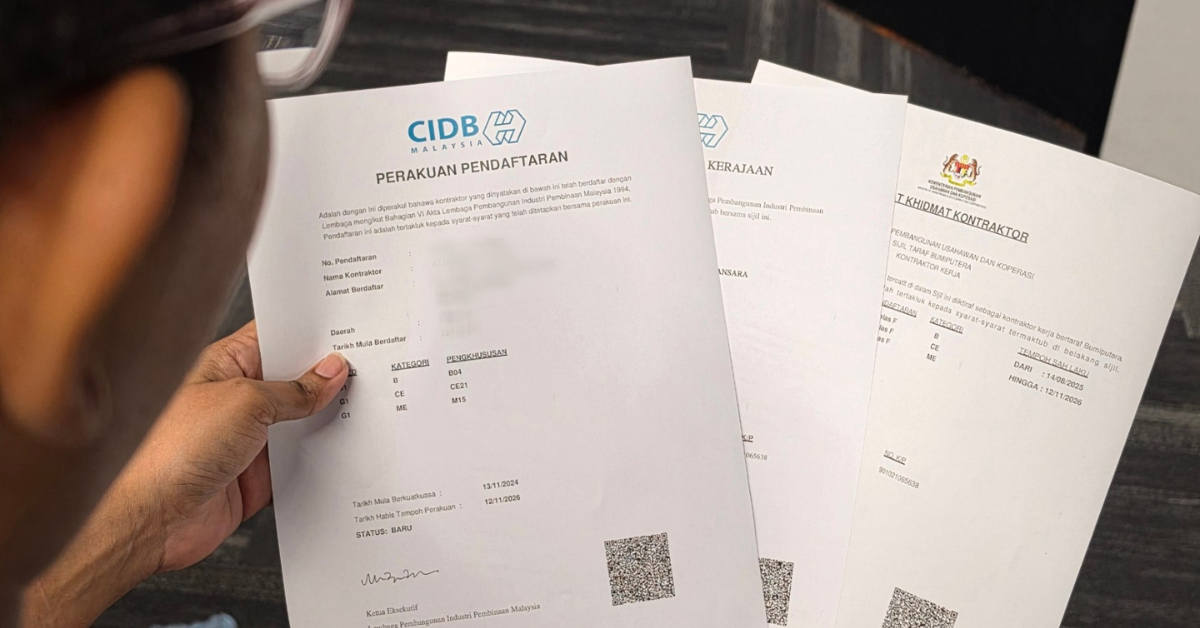
My licences covered three categories, which permit general building construction, civil engineering work such as roads, bridges, and drainage, as well as pollution-control systems under the mechanical and electrical category.
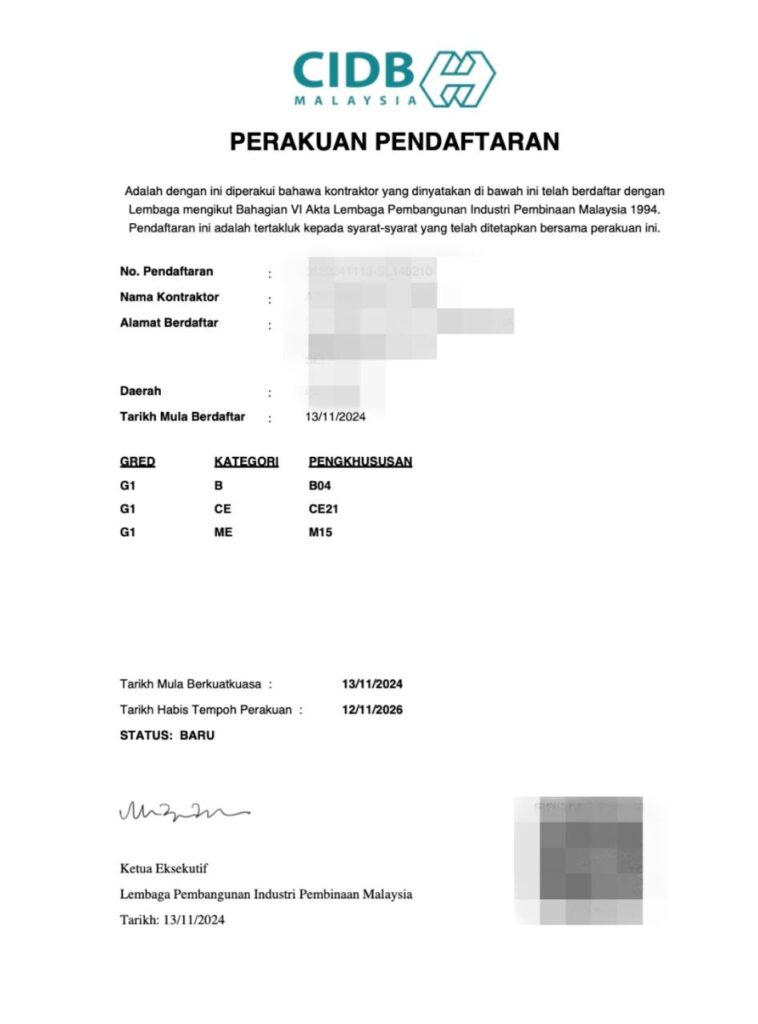
The journalist's Contractor Registration Certificate (CIDB) is registered under the Petaling district and is valid until 12 November 2026. · Image via SAYS
With the knowledge I gained from a mere one-day course and a 21-page slide deck, I would certainly not have been capable of even acting as a mandor, or site supervisor, let alone ensuring that any project I undertook met the required specifications and standards.
That is why I stopped at just one attempt — and, to be honest, it was an attempt where I prayed hard that I would not succeed.
With the licences I have secured, my chances — without relying on proxies — were essentially the same as other applicants, as the Construction Industry Development Board (CIDB) had already verified that I met both the technical and financial requirements, including maintaining a minimum of RM10,000 as a G1-grade contractor.
If I were bidding for a project worth RM300,000, I would only need to have RM4,500 — or 1.5% of the indicative price — as bid security. The minimum required amount is just RM2,500.
After securing a project, contractors may seek financing from agencies such as Majlis Amanah Rakyat (MARA), obtain initial capital from the awarding company, or take loans to fund project execution.
Click on each step below to view details of the bidding process.
A contractor must have the following valid certificates:
Contractor Registration Certificate
Government Procurement Work Certificate
Bumiputera Status Certificate
There are several types of projects:
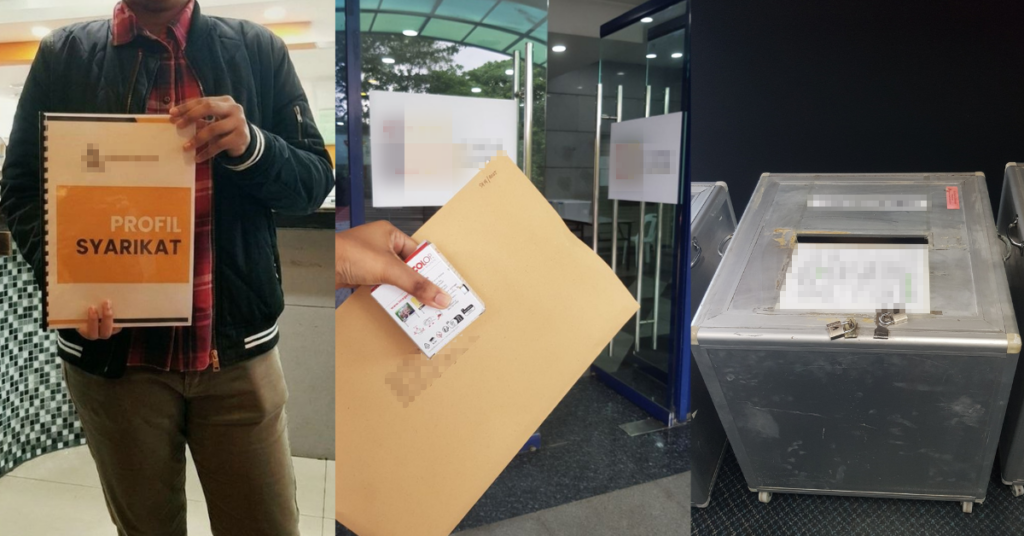
Contractors must purchase the official quotation booklet and submit all required materials, including:
Quotations are evaluated by an appointed committee in accordance with the Ministry of Finance (MOF) Quotation Circular.
Key evaluation criteria include:
Minimum capital requirement: 1.5% of the Indicative Price (subject to a minimum of RM2,500).
Assessment of the bidder's financial standing, available credit facilities, and the value of current "work-in-hand" (ongoing projects).
Evaluation of the bidder's professional and technical personnel, work experience, performance record, and existing projects.
After securing a project, contractors typically fund operations through:
Seeking financing from bodies like MARA.
Obtaining advance funding from the awarding agency.
Securing bank loans to cover operational costs.
He would secure projects and then subcontract them to others, ensuring the projects he took on paid enough that he still retained a portion after paying the subcontractor, while also building an emergency fund in case anything went wrong.
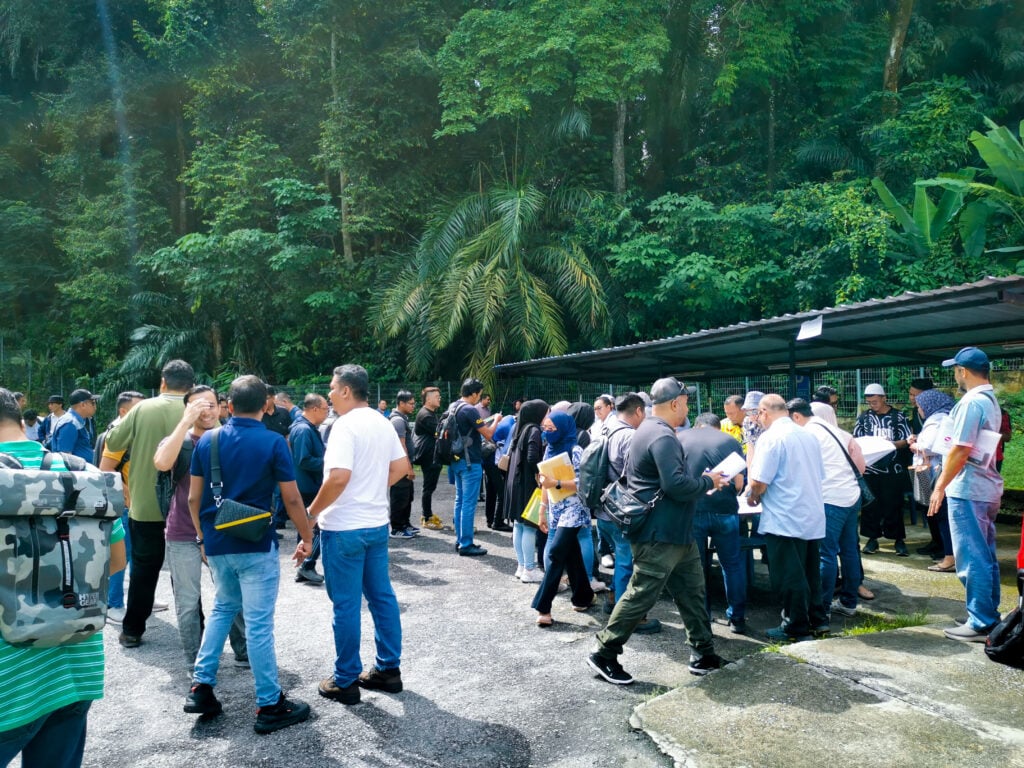
The journalist attended several pre-tender briefings for government projects. · Image via NSTP
When a contractor friend warned me I would see elderly people — some barely able to walk — at pre-tender briefings for government projects, I thought she was exaggerating.
But I was quickly disabused of that notion when I attended one such briefing.
At first, I noticed an elderly uncle, bent with age and white-haired. He moved slowly but seemed alert enough to supervise workers.
Then I saw an elderly woman needing assistance to move, and I wondered: how could officers accept her as a contender?

Sketch of the journalist's view at a state briefing: an elderly woman, guided by a younger lady, moved slowly and couldn't visit every area. · Image via AI Generation / Gemini
For context, these briefings are compulsory for anyone bidding for three projects under a state foundation. Industry sources said such sessions often draw large crowds, though some attendees are merely proxies.
I attended at least three briefings. Contractors are formally briefed on renovations, but many attend just to get an attendance slip, qualifying them for the tender.
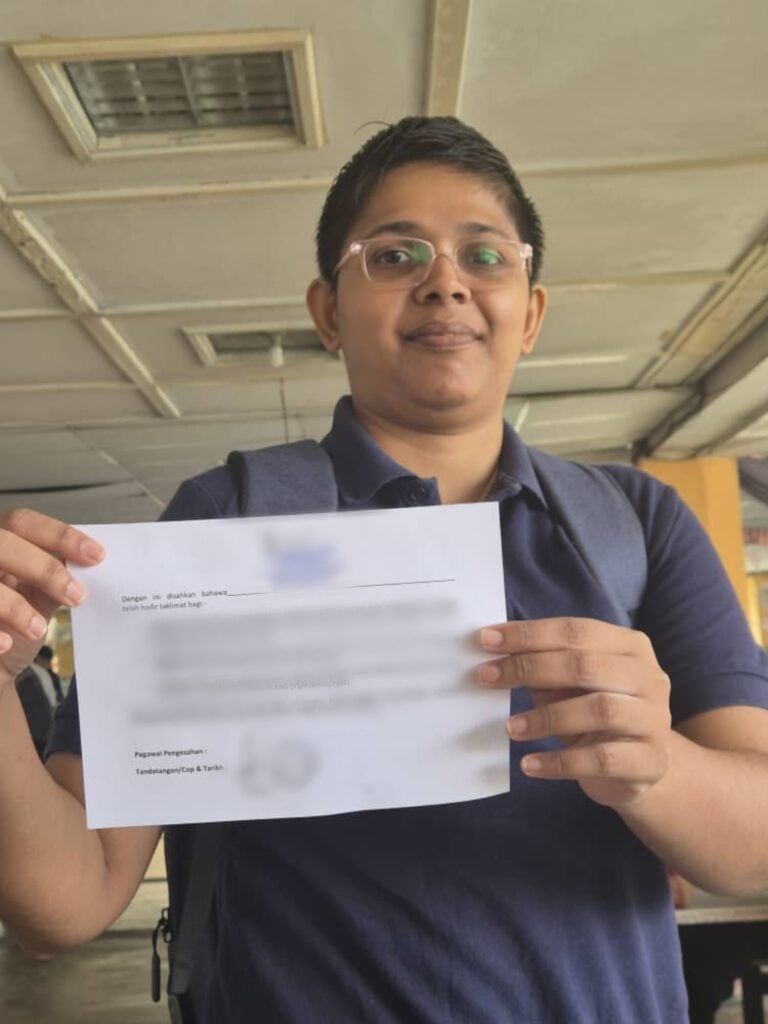
The journalist holds an attendance slip from one of the briefings she attended, which allows her to participate in government project bidding. · Image via NSTP
Attendees visit the site to understand the work, then receive the coveted slip. That's when the slip-swapping begins: one person quietly waits, and within seconds, several others hand over their forms.
It happens fast, almost unnoticed.
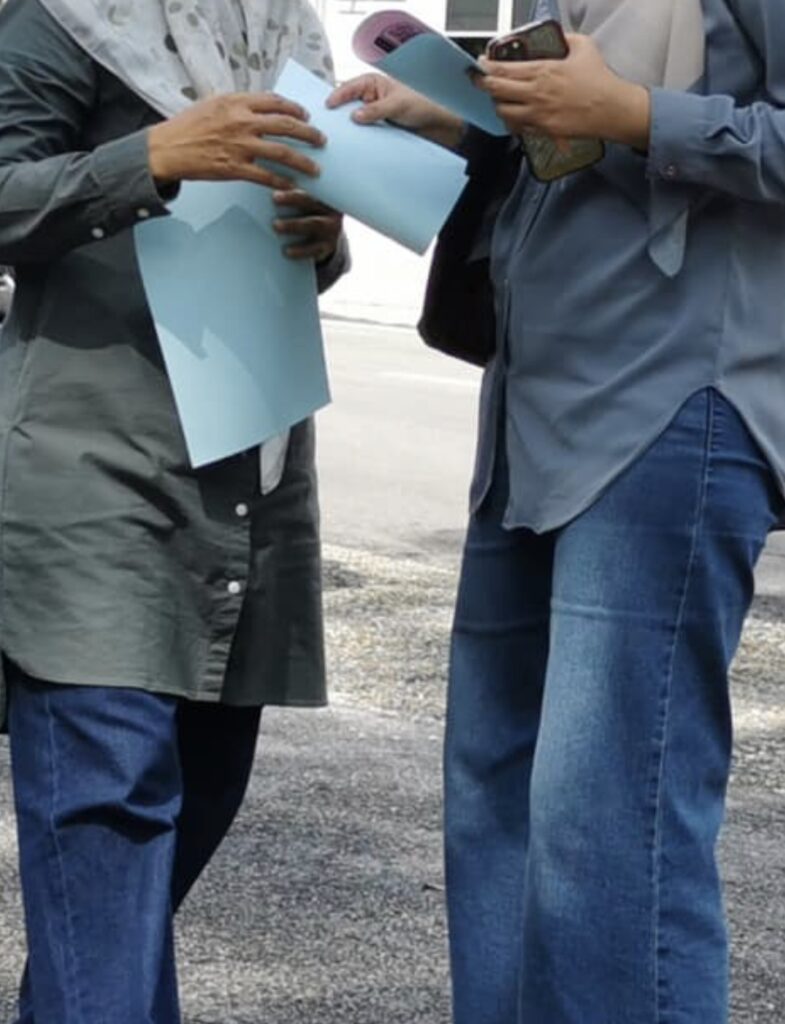
A contractor is supposed to have just one company and submit a single attendance slip with their quotation book. But the journalist saw several people secretly handing their slips to a single collector. · Image via NSTP
Another red flag appeared on submission day.
Only three projects were available, so each company could submit three tenders, yet some individuals arrived with boxes full of envelopes. One person carried 12.
Unless acting as a runner for multiple companies, it strongly suggested proxy submissions.
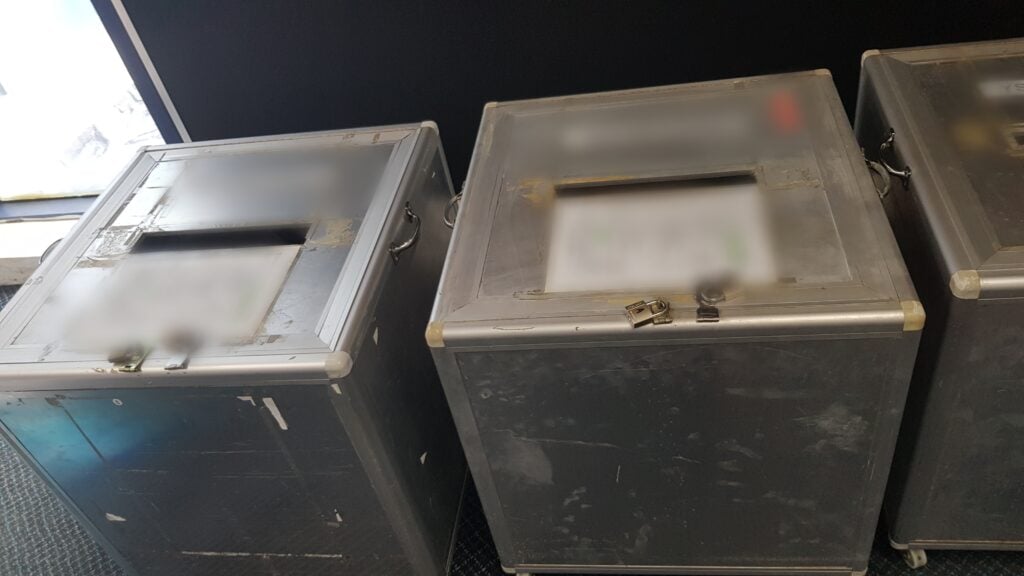
A company is allowed to join only three projects, yet some individuals attended with up to 12 quotation books. · Image via SAYS
To verify these claims, I checked the CIDB website, which lists every registered contractor. Many companies shared the same phone number — in some cases, 16 companies under a single contact.
Most of these companies held the same CIDB grade — usually G1 — or a range from G1 to G7. In Malaysia, a CIDB grade indicates the project size and value a contractor may handle; each company is supposed to have only one.
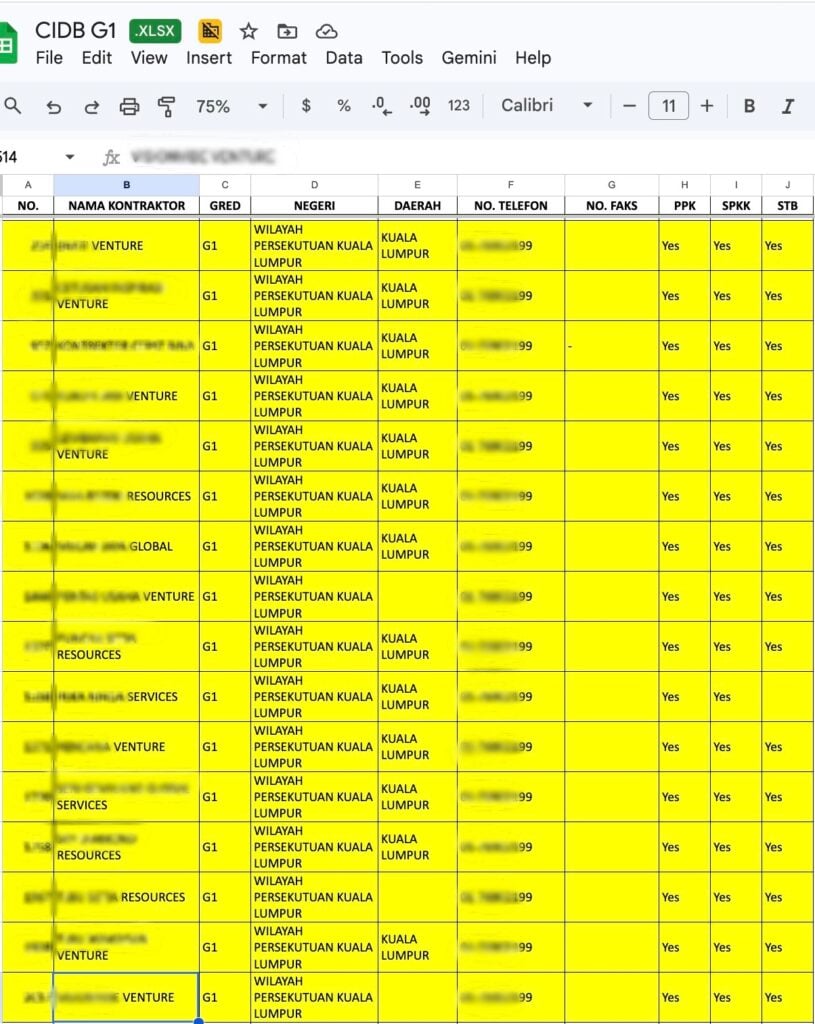
Checks on the CIDB contractor database revealed that many contractors share similar phone numbers, raising suspicions that they may be connected. · Image via SAYS
These companies, both sole proprietorships and private limited companies, operated across several states. Many listed numbers were no longer in service; those that answered admitted managing multiple companies with the same contact.
"I'm a contractor. I'm in charge of these companies — they're all my subsidiaries."
— A contractor linked to over 10 registered firms under a single phone numberAnother in northern Malaysia confirmed that three companies under her contact shared an office. When asked if the number belonged to a construction company or a company secretary, she said:
"We do have a secretary, but the company is a construction outfit. All three companies are based here. Our headquarters are here, and all the bosses are here."
— A contractor in northern Malaysia, confirming three companies under one contact shared an officeA proxy operator normally enlists people close to them — family members, friends — to register a company, offering monthly remuneration in return. Getting legalised is easy, and many of these individuals have no construction knowledge whatsoever.
These proxies attend mandatory pre-tender briefings and quietly hand their slips to the operator. This gives the operator the ability to submit multiple bids under different company names, flooding the pool.
On submission day, one person submits a box full of envelopes probably representing multiple companies — drastically increasing the probability of winning a bid.
Once a project is awarded, it is sometimes subcontracted to others, skimming a margin off the top while doing none of the construction work themselves.
What this investigation reveals is not the story of a few bad actors — it is the story of a system so permissive that bad actors thrive within it without needing to hide. Proxy usage, slip-swapping, and shell company networks are not whispered secrets; they happen in plain view, at government-mandated briefings, in front of officials.
The question is not whether this is happening. The question is whether those with the power to fix it are watching closely enough to care.
With our findings in hand, we approached the relevant authorities for their response. Read what the Construction Industry Development Board (CIDB) and the Malaysia Competition Commission (MyCC) have to say in Parts 5 to 8.